
Population and Environment
The field of population and environment explores the relationship between demographic growth, natural resources, spatial planning, and sustainability. The Center highlights that Israel is expected to become one of the most densely populated countries in the OECD in the coming decades due to exceptionally high population growth. This reality raises critical questions regarding land use, transportation systems, noise pollution, greenhouse gas emissions, water and energy consumption, food security, marine ecology dynamics, and the preservation of open spaces and biodiversity.
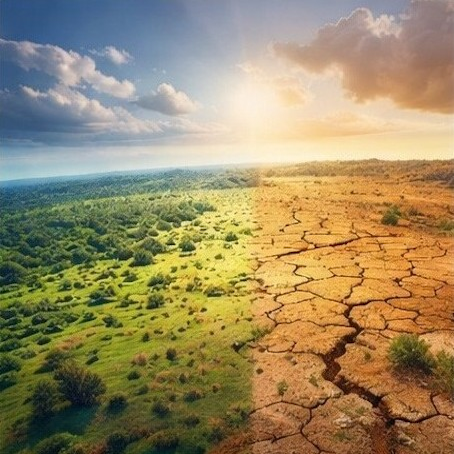
Academic research in this field focuses on the environmental consequences of population growth, including greenhouse gas emissions, biodiversity loss, transportation congestion, and increasing demand for natural resources. Researchers also examine the implications of rising population density for urban quality of life and regional planning and concrete management alternatives to ameliorate the adverse impacts of crowding and high density living. The field is inherently interdisciplinary, bringing together demographers, environmental researchers, psychologists, urban planners, and data scientists with the understanding that most of Israel’s sustainability challenges have demographic dimensions, and solutions require expertise and insights from the social sciences as well.